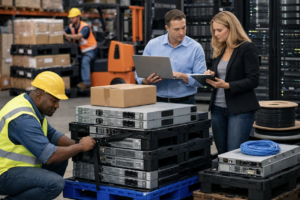
The IT industry runs on precision, speed, protection, and uptime. Every server, monitor, network switch, cable system, battery backup unit, and hardware component has to move safely through warehouses, fulfillment centers, distribution hubs, and deployment environments before it ever reaches a rack or workstation. That means the physical side of technology matters more than many people realize. Even in a world driven by software, cloud services, AI, and automation, the hardware behind those systems still depends on smart material handling.
That is where a Stackable Pallet Manufacturer becomes highly relevant. Plastic stackable pallets help support the IT industry by improving storage efficiency, reducing product damage, simplifying warehouse operations, and creating cleaner, more dependable logistics systems. For companies handling expensive electronics, those benefits are not small operational upgrades. They directly affect cost control, speed, and reliability.
The broader Information technology field covers everything from computing systems to communications networks, and those environments rely on stable supply chains that protect equipment from the moment it leaves production to the moment it is installed. When that supply chain is stronger, the business behind it becomes stronger too.
Why Physical Logistics Still Matter in a Digital Industry
It is easy to think of IT as a purely digital space, yet the industry is heavily dependent on physical infrastructure. Data centers require racks, servers, cooling equipment, power systems, and networking hardware. Managed service providers maintain replacement hardware. Enterprise offices rotate laptops, monitors, and accessories. E-commerce technology companies ship devices daily. Even cloud growth depends on hardware moving safely and efficiently.
That reality is becoming more important, not less. Gartner reported that worldwide IT spending is projected to reach $6.15 trillion in 2026, up 10.8% from 2025, while total data center spending is expected to surpass $650 billion in 2026. Gartner also says worldwide AI spending is forecast to hit $2.52 trillion in 2026, showing just how aggressively businesses are investing in infrastructure that must be manufactured, stored, and transported.
For IT companies, better logistics are not a side issue. They are part of staying competitive. That is one reason plastic stackable pallets make sense. They help create a more organized warehouse footprint, reduce instability during storage and transport, and support repeatable handling processes that technology operations need.
How Plastic Stackable Pallets Fit IT Warehousing
Plastic pallets are especially useful in IT and electronics environments because they offer consistency. Wood pallets can vary in size, condition, and structural integrity. They can splinter, absorb moisture, and leave debris behind. In contrast, plastic pallets provide a more uniform platform, which matters when teams are moving sensitive equipment and trying to maintain clean, controlled spaces.
In IT warehousing, stackability is one of the biggest advantages. A stackable design allows businesses to maximize vertical storage, create neater staging areas, and improve the predictability of inventory layouts. That matters when products need to move quickly and when floor space is expensive. Warehouses handling servers, peripherals, and boxed electronics benefit from orderly storage systems that reduce clutter and make retrieval faster.
This matters even more as AI infrastructure expands. IDC recently reported that AI infrastructure spending reached $89.9 billion in the fourth quarter of 2025 alone, with full-year 2025 spending totaling $318 billion and a forecast that the market will surpass $1 trillion by 2029. As infrastructure investment rises, the need for dependable storage and transport systems rises with it. IDC’s AI infrastructure spending update reinforces how quickly the physical side of IT is scaling.
Better Protection for High-Value Equipment
IT hardware is expensive, and damage during storage or transit can cut into profit fast. A cracked casing, bent component, moisture issue, or unstable load can turn a valuable shipment into a costly setback. Plastic stackable pallets help reduce those risks by offering a more stable and durable platform for goods that need extra care.
Because they are manufactured to consistent specifications, plastic pallets support more reliable stacking and handling. That consistency helps forklifts, pallet jacks, warehouse staff, and automation systems move goods with fewer surprises. For an IT business, that can translate into fewer damaged shipments, less repackaging, fewer returns, and stronger customer satisfaction.
There is also the cleanliness factor. Dust, fragments, and moisture are never welcome around electronics. Plastic pallets are easier to clean and do not shed nails or splinters. That makes them a practical choice for warehouses, integration facilities, and supply chains tied to technology products. In an industry where a small handling mistake can affect a high-value item, that cleaner platform matters.
Supporting Automation, Standardization, and Smarter Operations
The IT industry appreciates systems that are scalable, standardized, and efficient. Plastic stackable pallets align with that mindset. They support automation-friendly environments because their dimensions and performance are more predictable. That helps businesses build smoother workflows in storage, picking, shipping, and receiving.
Today’s IT industry is also watching larger infrastructure shifts unfold in real time. Reuters on Europe’s sovereign cloud contract shows how cloud infrastructure strategy is becoming more tied to control, resilience, and long-term planning. In a similar way, warehouse and shipping systems also benefit from dependable infrastructure choices. A company that standardizes around quality plastic pallets is doing in logistics what leading IT firms do in technology architecture: choosing consistency to improve resilience.
That kind of standardization becomes even more valuable when companies expand into multiple facilities or serve national clients. The more locations a business manages, the more important repeatable storage and shipping practices become. Plastic stackable pallets support that kind of operational discipline.
Helping the IT Industry Move Faster
Speed matters in IT. Whether a company is shipping replacement equipment, delivering hardware for a rollout, or supplying data center components, delays can create expensive downstream problems. Better pallet systems can help reduce those delays by making warehouse operations more efficient.
Stackable plastic pallets help teams organize inventory in a way that improves visibility and saves space. They make it easier to stage shipments, separate product categories, and maintain cleaner aisles and storage zones. They can also support faster load building and unloading because staff are working with more predictable pallet conditions.
That operational speed matters in a market being pushed forward by AI and hardware demand. Reuters on Google’s AI chip talks reflects how aggressively major technology companies are pursuing more efficient computing infrastructure. As chip development and AI deployment move faster, the companies supporting that ecosystem need warehousing and shipping systems that can keep pace.
When IT companies improve how they store and move hardware, they are doing more than improving logistics. They are supporting faster installs, faster replenishment, and faster response times for customers and internal teams.
A Stronger Fit for Data Center and Enterprise Supply Chains
Data center growth is one of the clearest reasons this topic matters. As companies invest in servers, backup systems, cooling technology, cabling, and networking equipment, they need storage platforms that can handle weight, repetition, and careful movement. Plastic stackable pallets are well suited for that kind of environment because they are durable, reusable, and designed for organized stacking.
Enterprise IT departments can benefit as well. Hardware refresh cycles, office relocations, multi-site deployments, and managed inventory all become easier when the shipping and storage platform is dependable. A business does not need to manufacture hardware to benefit from better pallets. It only needs to store, move, or deploy technology equipment on a recurring basis.
The trend toward modernization reinforces this point. Reuters on the Microsoft-Stellantis AI partnership highlights how enterprises are using AI, cybersecurity, and Azure-based modernization to reshape operations, including efforts to reduce data center footprints. That kind of transformation depends on a strong physical and digital backbone working together.
Sustainability, Reuse, and Long-Term Value
Many IT companies are also paying more attention to sustainability, operational efficiency, and long-term value. Plastic stackable pallets can support those goals because they are reusable and built for repeated use over time. That durability can help reduce frequent replacement needs and support more stable warehouse planning.
This is not just about being eco-conscious. It is also about being practical. Reusable pallet systems can support cleaner processes, lower disruption, and more predictable performance over the long term. For businesses moving sensitive technology products, a more durable shipping platform can be a smart investment rather than a simple packaging decision.
That kind of thinking fits where the market is headed. Gartner’s 2026 IT spending forecast and Gartner’s 2026 AI spending outlook both point to continued large-scale investment in technology infrastructure. As spending rises, companies that tighten the physical side of their operations place themselves in a better position to scale well.
Conclusion
The IT industry depends on much more than code, cloud software, and digital services. It also depends on the safe, efficient movement of physical equipment through warehouses, distribution systems, and deployment pipelines. That is why a plastic pallet strategy deserves more attention than it usually gets.
A stackable plastic pallet manufacturer supports the IT industry by helping businesses protect valuable hardware, use warehouse space more effectively, improve consistency, support automation, and move products with greater confidence. In a market shaped by AI growth, rising infrastructure investment, cloud expansion, and faster modernization, those advantages matter. 📦💻🚀
When an IT company improves the way it handles the physical side of operations, it strengthens the digital side too. That is the real value behind choosing the right pallet solution.